About this piece
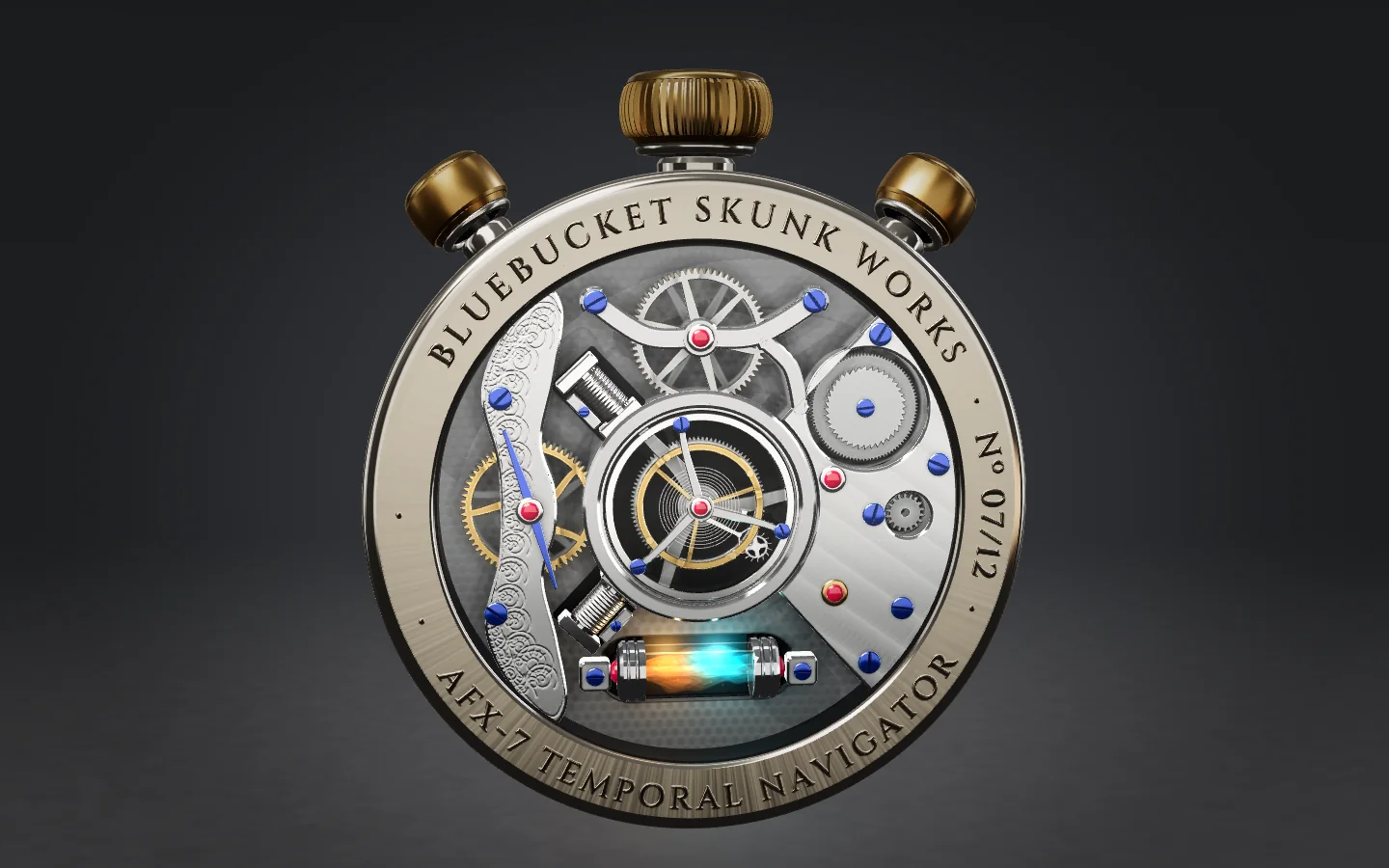
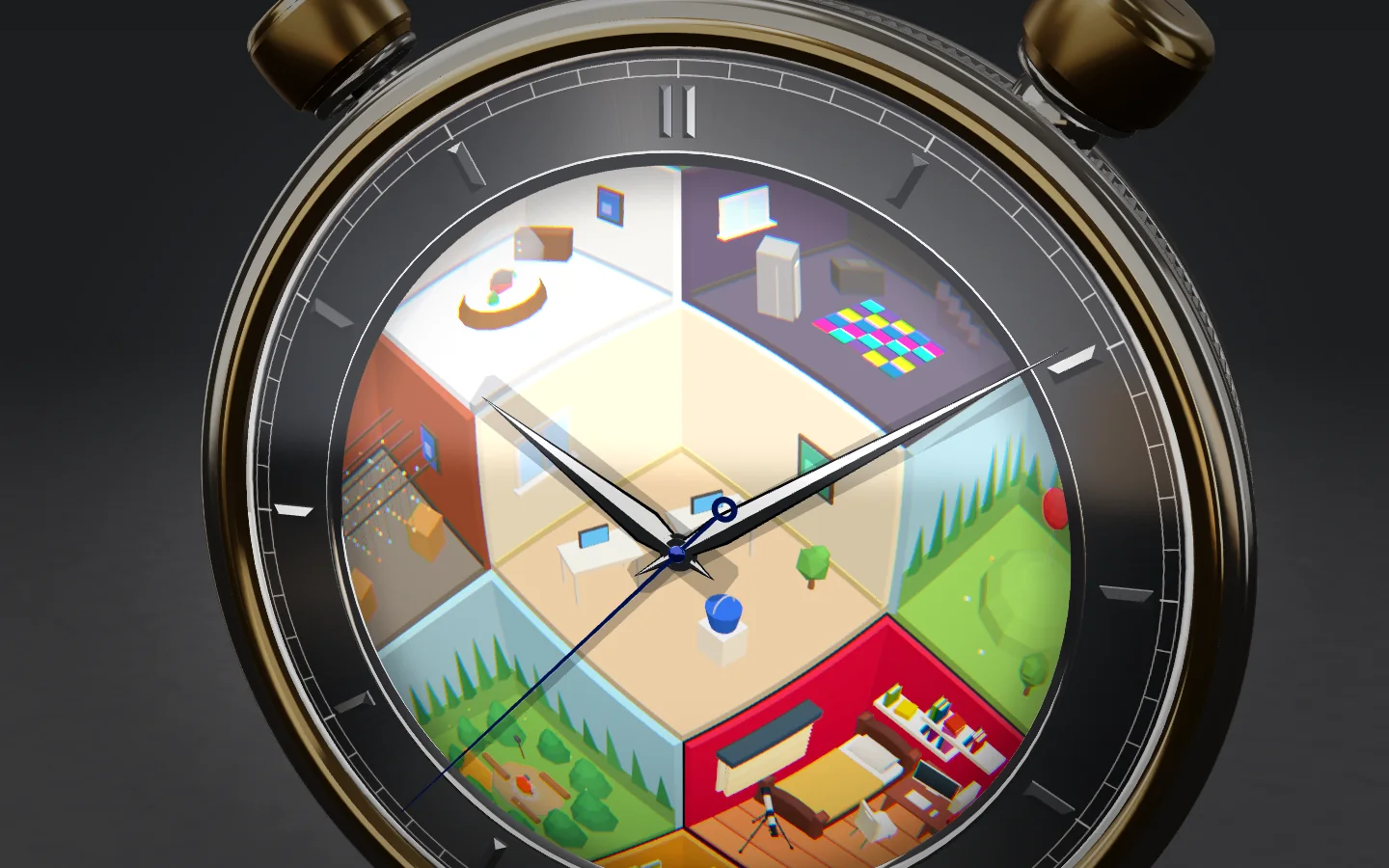
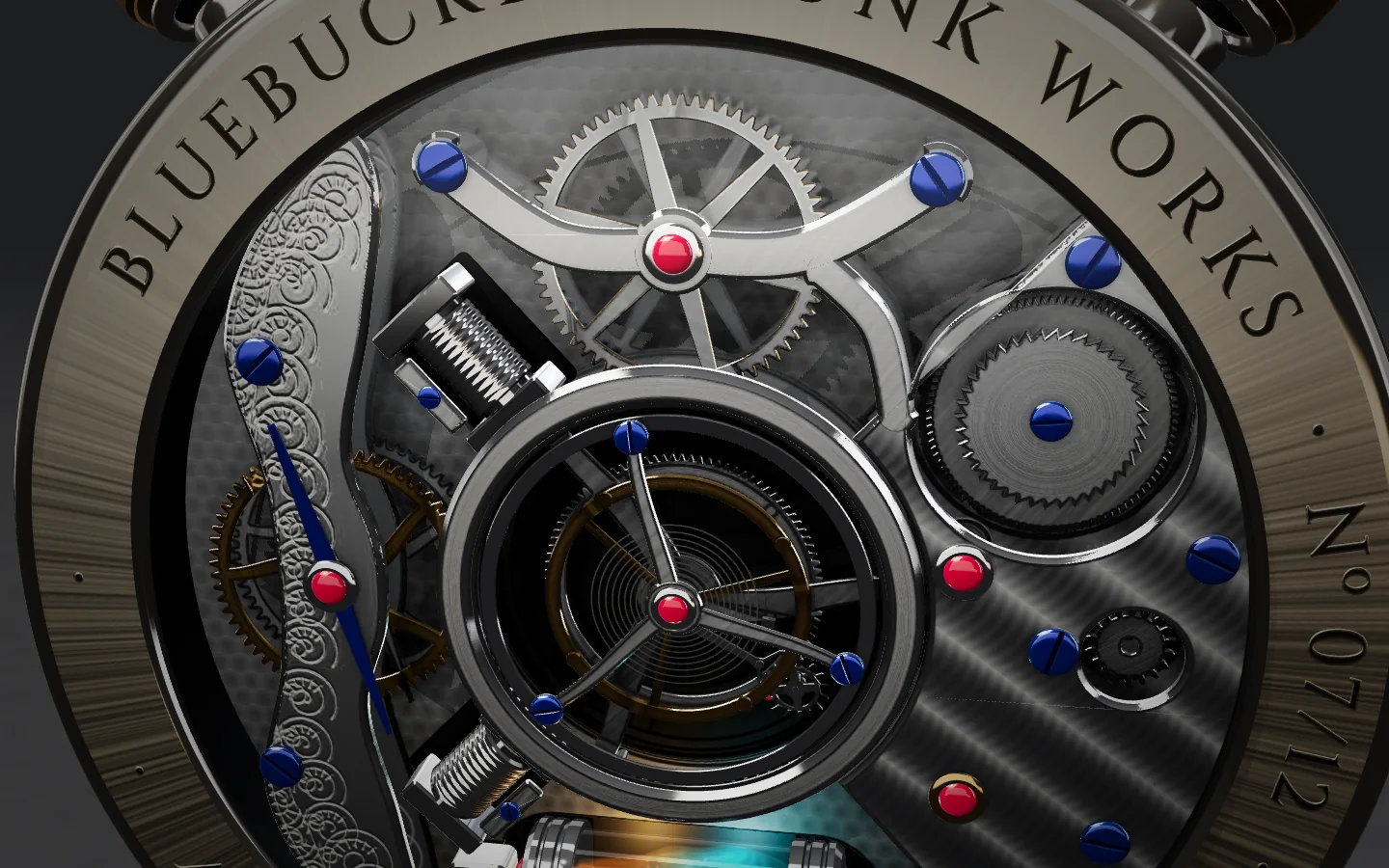
The AFX-7 is the Temporal Navigator from the About page, made as an object. On the front, its map of the rooms shows through a polished aperture in a slate dial with applied indices, under a domed sapphire, and faceted hands keep the movement's time; the three crowns zoom and recentre the map as the About page's do. Turn it over and the caseback opens onto a hand-finished movement: polished bridges, Côtes de Genève, an engraved scroll bridge, blued screws and rubies, and a flying tourbillon at the centre turning once a minute.
Field notes
Drag to turn it all the way round. Let go mid-turn and it glides to a stop; scroll or pinch to look closer, within limits chosen so the detail holds.
The movement keeps real time. The balance beats at 4 Hz (28,800 vibrations an hour) with an amplitude of about 285°, the pallet lever flicks on every beat, the escape wheel advances one tooth every two beats, and the tourbillon cage carrying them turns exactly once a minute.
Every wheel moves only when the escapement lets it, in discrete steps, through involute teeth that really mesh. S slows the beat eightfold so you can watch the lever work; M adds the tick.
The hands run on the same escapement: the seconds hand sits on the tourbillon's arbor and steps eight times a second with the cage, so pausing, slowing or scrubbing the movement moves the dial too. Press the − and + plungers to zoom the room map, and the crown at twelve to recentre it.
The story
The About page has a small navigator in its corner, an orb that shows the rooms and takes you between them. The AFX-7 is what that device would be if it had been built in a Bluebucket Skunk Works workshop, in steel and sapphire. Twelve were made. This is the seventh, and it was never meant to leave the workshop.
The front still does the navigator's job. The room map sits behind a polished aperture in the dial and moves as the orb does: rest at the rim of the glass to travel, drag to pan, pinch to zoom, or use the crowns. Turn it over and it is a watch: a flying tourbillon turning once a minute and, at six o'clock, a sapphire vial of slow amber-and-cyan plasma, the one part that admits where it came from.
It is made to be taken apart. The explode slider lifts the layers off the movement while it runs, each part can be clicked for its name and its job, the gear train, the escapement and the tourbillon can be lit on their own, and one clock drives everything, so the movement can be paused, slowed to a tenth, run at four times or scrubbed across its minute.