PLAYGROUND 010 / SOUND + INTERACTION
The Listening Bar
A vintage vinyl listening bar, stocked with every record in Naveen's collection.
About this piece
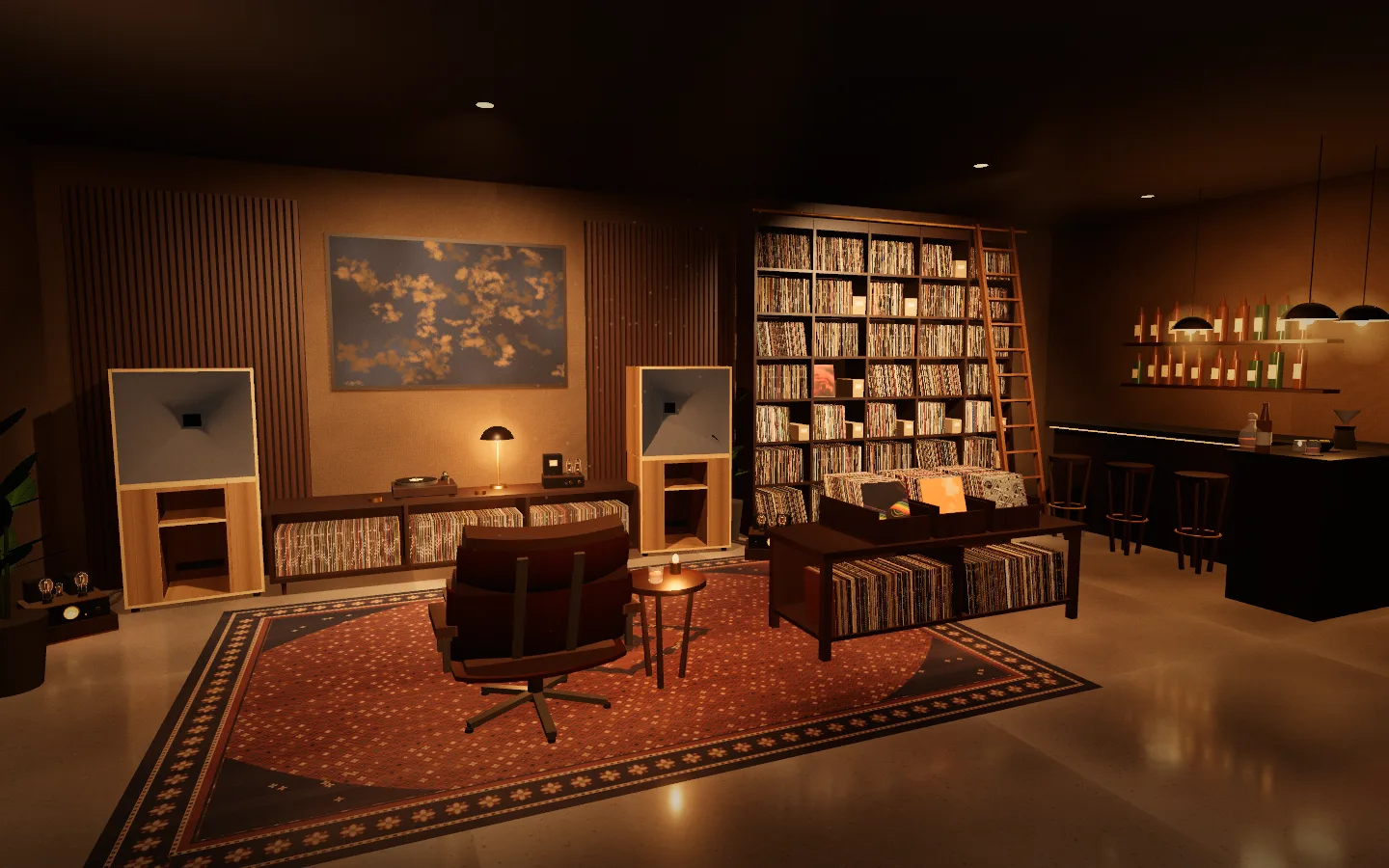
A freight lift opens onto a small listening bar at night: warm tungsten light, a walnut console with a turntable, a pair of horn speakers driven by tube monoblocks whose VU needles move with the music, a lounge chair at the sweet spot, a catalog wall to the ceiling and crates to dig through. Every record in the room is a real one from Naveen's Discogs collection, 294 of them, and something is already on the platter when you arrive. Walk the wall, sort it, dig the crates, pull a sleeve out and turn it over, then put it on.
Field notes
The collection is a snapshot of Naveen's public Discogs collection: titles, artists, labels, catalogue numbers, formats, genres and the date each record was added, with the cover art, the real back cover and the centre label where Discogs has photos of them. Coloured vinyl comes from each pressing's own description, so a splatter or a clear blue record looks the way it does on the shelf.
Sort the wall by artist, album, year, label, genre or the date added and every record flies out of the shelf on its own arc, turns its cover to the room mid-flight and files itself in its new place. The crates follow the same order.
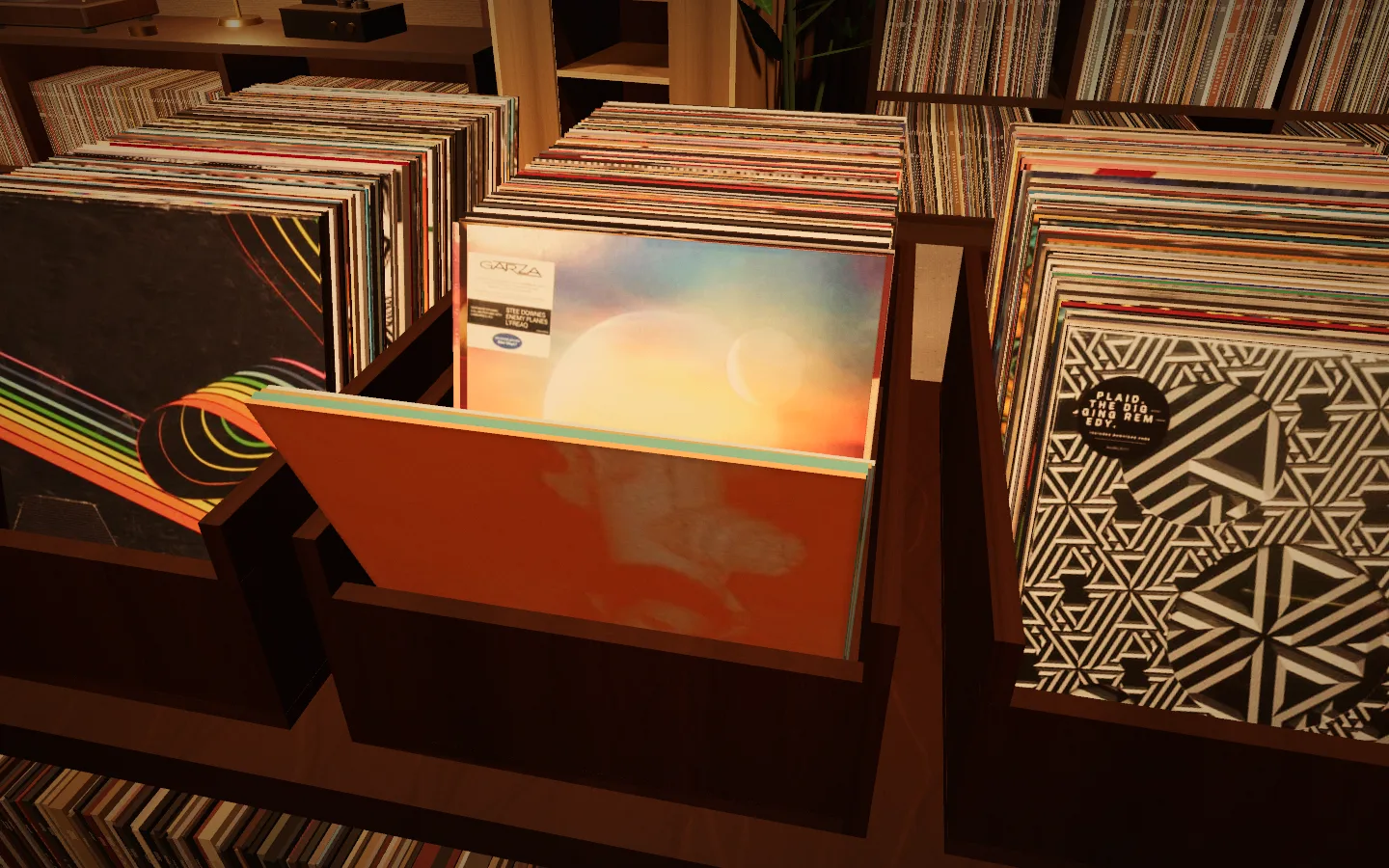
Dig the crates the way you would in a shop: flip through the sleeves, lift one out, turn it over in your hands, slide the disc out of its sleeve. Step to the record either side without putting it back.
Put a record on and it plays through the system: the arm swings over and drops, the platter turns, and Apple Music's 30-second previews of its tracks play one after another through the two horns, with a touch of vinyl warmth and crackle. Press C to sit down in the chair and just listen.
Every record is a real one
The room is stocked from a snapshot of a public Discogs collection, 294 records (293 releases, one owned twice), taken with Discogs' public API and frozen into the page, so nothing is fetched from Discogs while you browse. Each record keeps its title, artists, year, label and catalogue number, formats, genres and styles and the date it was added. Covers are packed into one atlas for the shelves and crates; the full-size front, the real back photo and the centre label load only for the record in your hands, and a typeset back stands in where Discogs has no photo of one.
The spines are printed: every record gets its artist and title set along its spine at its true thickness, so the catalog wall reads like a real shelf from close up. Box sets get thick spines and coloured vinyl is drawn from each pressing's description.
A vintage, minimal listening bar
Nothing in the room is a model file. The walnut console, the birch-ply horn cabinets, the lounge chair, the rug, the catalog wall with its rolling ladder and the bench of dig crates are built in code, with their wood, plaster, concrete and rug textures drawn at start-up. The horn speakers are inspired by OJAS's: an open birch-ply bass cabinet with a square felt horn on top.
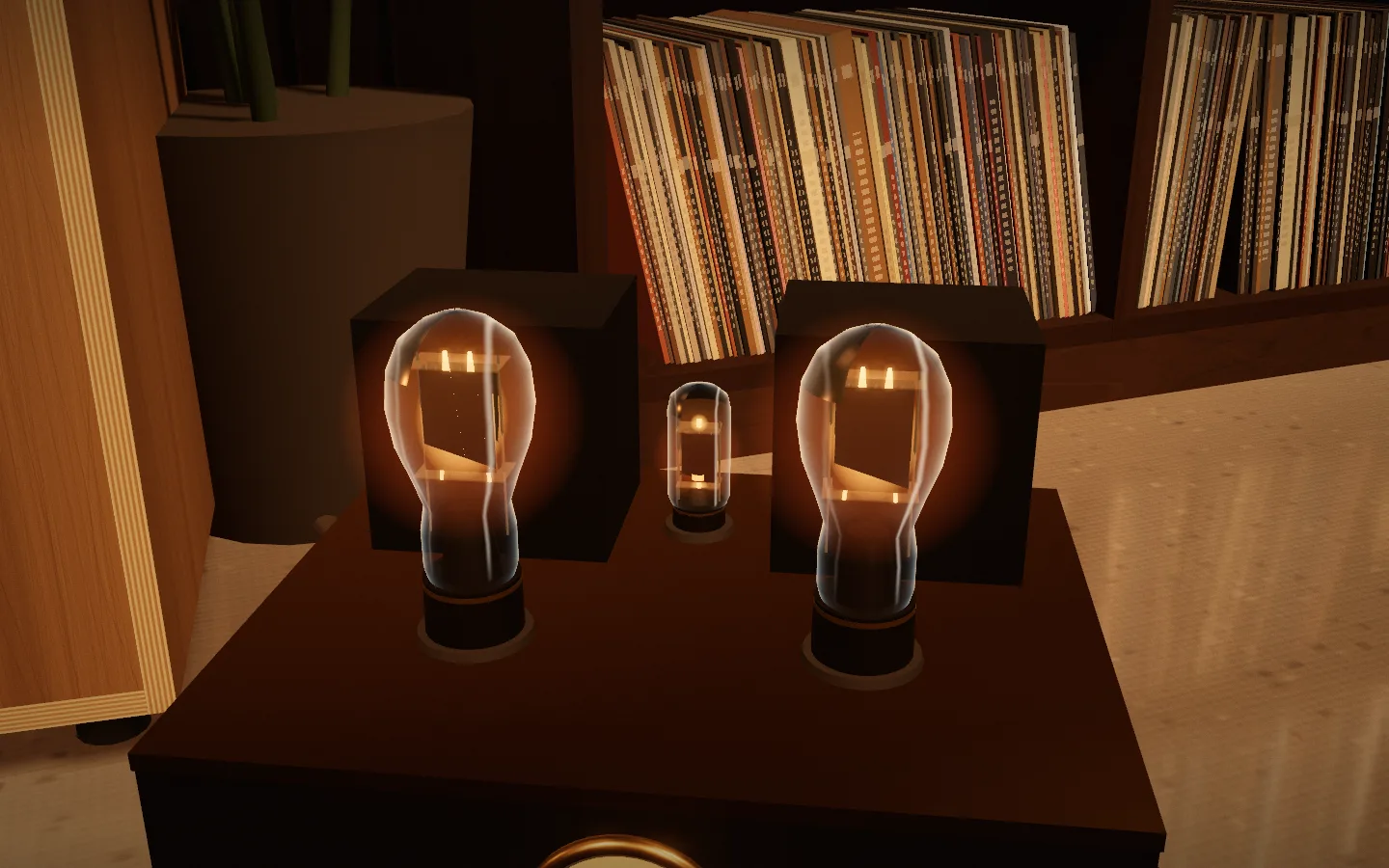
Each speaker has its own tube monoblock on a low walnut stand: two 300B output valves and a driver modelled on the real ones, with a glowing filament, grid wires and the silver getter flash in the crown, and an amber VU meter whose needle reads the music's real level. On laptops the room is rendered with soft bloom on the lamps and valves, a polished concrete floor that reflects it and haze in the tungsten beams.
Putting a record on
Records play Apple Music's 30-second previews. Each release was matched against the iTunes Search API by artist and title, ignoring edition noise like remasters and anniversary editions; 193 of the 293 unique releases have previews. The rest, mostly private pressings, classical recordings by other performers and records not in the US store, play just the run-in groove.
The turntable runs like a real one: the arm cues, drops with a soft thump, tracks across the record as the previews play, lifts between tracks and returns at the run-out. The sound goes through a gentle vinyl warmth, out of each horn from its own place in the room and into a short, dark room reverb, and the listening position follows the camera, so it sounds best from the chair.
In the details